
Protecting Your SCR Catalyst: How to Prevent Plugging and Extend DeNOx Lifespan
SCR systems are critical for NOx reduction but are highly vulnerable to ash plugging and ammonium bisulfate formation. Learn how specialized rake sootblowers and sonic cleaning technologies can protect your catalyst and ensure emission compliance.
Introduction: The Achilles Heel of Emission Control
To meet increasingly stringent global emission standards, Selective Catalytic Reduction (SCR) systems have become indispensable for modern power plants. While highly effective at reducing Nitrogen Oxides (NOx), the heart of the system—the ceramic honeycomb or plate catalyst—is fragile and highly susceptible to plugging. When a catalyst clogs, it not only reduces NOx removal efficiency but can also lead to catastrophic operational failures.
The Two Culprits: Fly Ash and Ammonium Bisulfate (ABS)
SCR catalysts typically operate in a high-dust environment (especially in high-dust SCR configurations). Plugging usually occurs due to two primary factors:
- Large Particle Ash (LPA) & Popcorn Ash: Large particles can physically wedge into the narrow channels of the catalyst, blinding the active surface area.
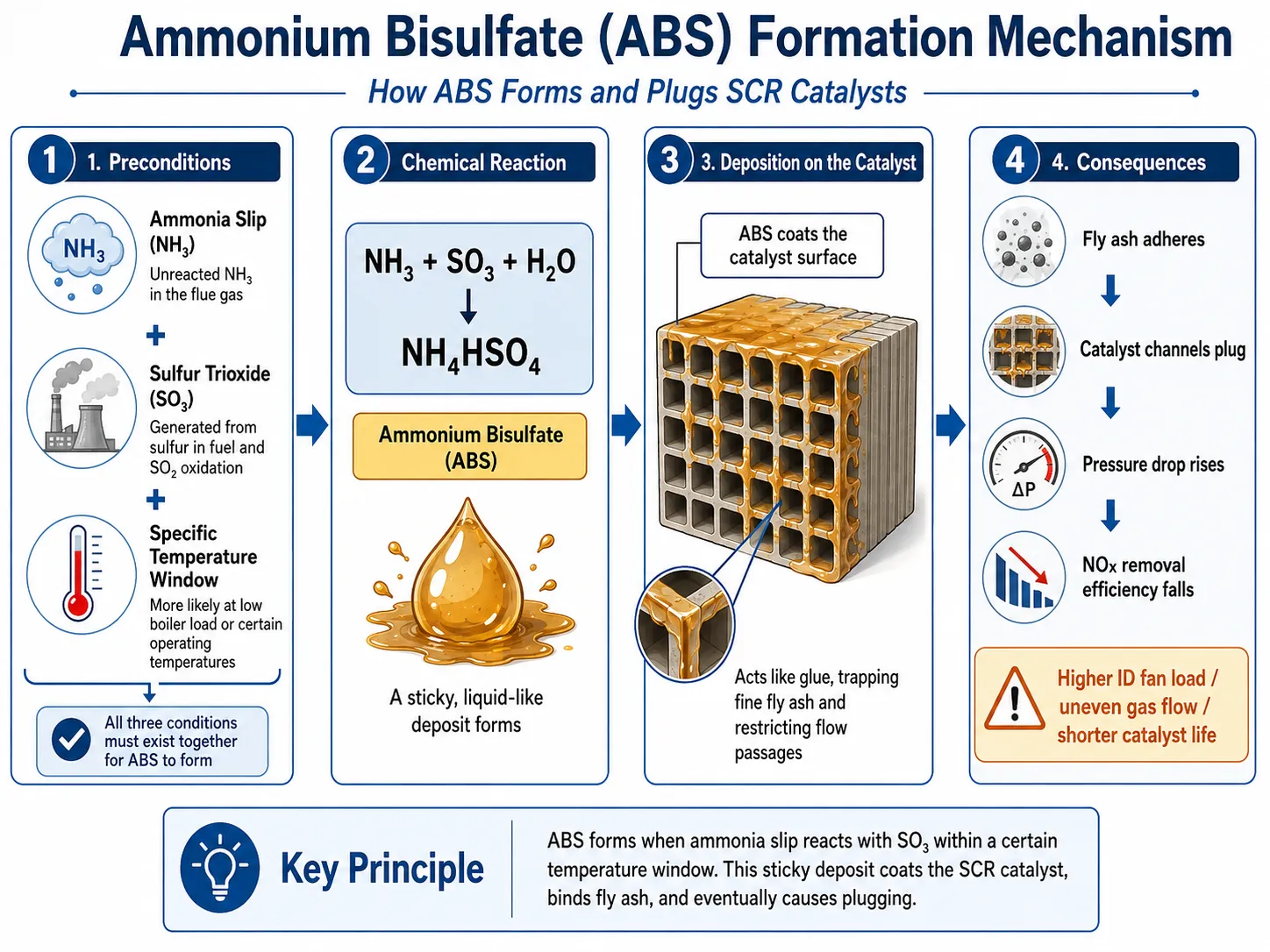
- Ammonium Bisulfate (ABS) Formation: At lower boiler loads or specific temperature windows, unreacted ammonia (ammonia slip) reacts with sulfur trioxide in the flue gas to form ABS. This sticky, liquid-like substance acts as a glue, binding fly ash to the catalyst surface and severely restricting flue gas flow.
The Cost of Inaction
Once plugged, the pressure drop across the SCR reactor spikes, forcing the induced draft (ID) fans to work harder and consume more auxiliary power. Worse, local blockages cause uneven gas velocity, accelerating catalyst erosion in clear areas. Ultimately, this leads to premature catalyst deactivation, forcing plants into costly replacements that can run into millions of dollars.
Sheenway’s Precision Cleaning Solutions for SCRs
Standard boiler sootblowers cannot be used here; the high-impact jet would shatter the fragile ceramic catalyst. Sheenway Power designs specialized cleaning systems engineered specifically for the delicate nature of DeNOx reactors:
- SW-SRKS Rake Sootblowers: Unlike standard retractable blowers, the SW-SRKS features a specialized "rake" lance with multiple precisely machined nozzles. It extends into the reactor above the catalyst bed and blows steam vertically downward, parallel to the catalyst channels. This design ensures maximum cleaning energy penetrates deep into the honeycomb structure without exerting damaging lateral forces.
- Sonic Sootblower Synergy: To combat the sticky nature of ABS, Sheenway Sonic Sootblowers offer continuous, non-destructive cleaning. By emitting low-frequency acoustic waves, they keep fine dust particles fluidized and prevent the initial chemical bonding of ammonium bisulfate on the catalyst surface.
- Low-Pressure Operation: Our systems are calibrated to operate at the exact steam pressure required to dislodge ash while maintaining strict safety margins for the catalyst substrate.
Conclusion
Protecting your SCR catalyst requires a proactive and precise sootblowing strategy. By upgrading to purpose-built rake and sonic sootblowers, power plants can maintain stable pressure drops, extend catalyst lifespans, and ensure continuous compliance with strict NOx emission limits.
Is rising pressure drop threatening your SCR system's performance? Contact Sheenway Power’s DeNOx specialists today to optimize your catalyst cleaning strategy.